Leave Your Message
Choosing the right Hybrid Vehicles requires more than comparing fuel economy figures. Global buyers face different roads, climates, fuel prices, tax rules, and service networks. A model that performs brilliantly in Tokyo may feel less suitable in Nairobi, Toronto, or rural Spain.
This guide examines leading hybrid options through practical ownership needs. It considers real-world efficiency, cabin comfort, safety technology, durability, cargo space, and long-term maintenance. A quiet city commute can reveal smooth electric assistance, while a steep highway exposes weak power delivery. Battery warranties also deserve careful attention. They can differ by market, model year, and local regulations.
No single vehicle wins everywhere. That is the honest part. Some hybrids save fuel in traffic but offer limited luggage space. Others provide impressive comfort but cost more than expected after insurance and servicing. Plug-in hybrids may suit drivers with home charging, while conventional hybrids can be simpler for apartment residents. The best choice depends on daily distance and available support.
Our comparisons use manufacturer data, independent testing, owner experiences, and common driving conditions. Still, published figures cannot perfectly predict every journey. Weather, tire pressure, driving habits, and passenger weight all influence results. Buyers should test the vehicle personally, inspect local warranty terms, and confirm parts availability before signing a contract. A careful decision may feel slower today, but it can prevent expensive disappointment later.
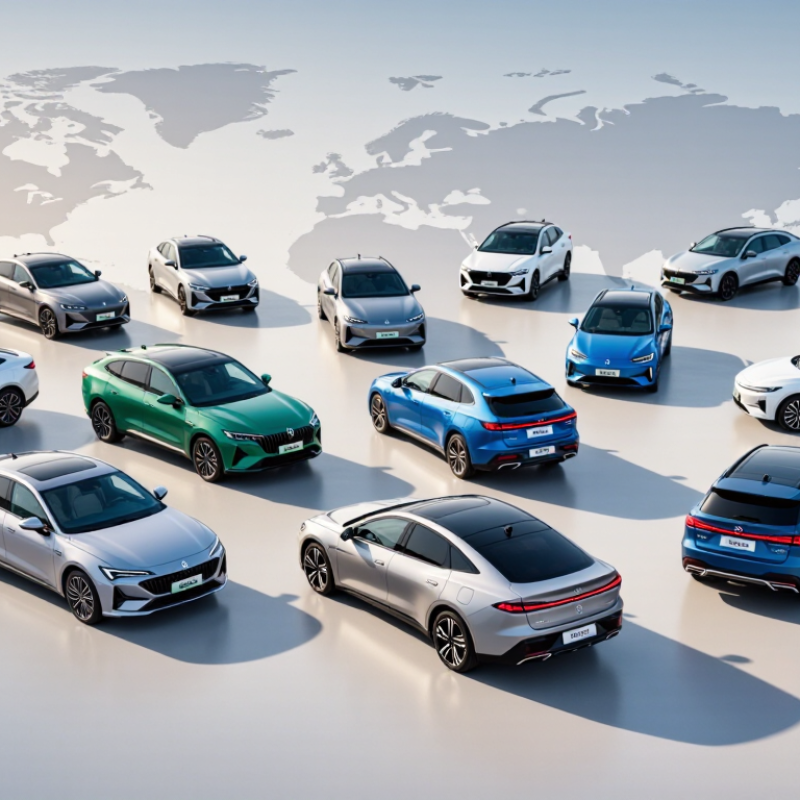
What Are the Top Hybrid Vehicles for Global Buyers?
Hybrid Vehicles: Definition, Powertrains, and Main Types
A hybrid vehicle combines an internal-combustion engine with one or more electric motors. It can switch between power sources or use both together. Regenerative braking captures energy that would otherwise become heat. A small battery stores that energy for later use. In city traffic, this system can reduce fuel consumption and make acceleration feel smoother. My first assumption was that every hybrid saves the same amount of fuel. Real driving proves otherwise.
A mild hybrid uses a small motor to support the engine during starting and acceleration. It usually cannot drive on electricity alone. A full hybrid has a larger battery and can move briefly using electric power. A plug-in hybrid carries a larger battery and charges from an external socket. It may cover daily trips electrically, when charging is convenient. A series hybrid uses the engine mainly to generate electricity, while the motor drives the wheels. Charging access matters.
For global buyers, the best choice depends on climate, roads, fuel availability, and repair support. Frequent urban driving favors full hybrids or plug-in systems. Long rural journeys may suit efficient full hybrids with simple refueling. Hot climates can increase battery cooling demands. Cold weather can reduce electric range and regenerative braking. A test drive should include traffic, hills, and rough surfaces. That comparison is more useful than a specification sheet. No hybrid type wins everywhere, and buyers should question optimistic efficiency claims.
Hybrid Vehicles: Definition, Powertrains, and Main Types
| Vehicle Type | Powertrain Configuration | Typical Electric-Only Capability | Typical Fuel-Economy Potential | Charging Requirement | Key Advantages | Limitations | Best Suited For |
|---|---|---|---|---|---|---|---|
| Full Hybrid Passenger Car | A petrol or diesel engine works with one or more electric motors. The battery is recharged through regenerative braking and engine operation. | Usually a few kilometres at low speeds, depending on battery size, temperature, road conditions, and vehicle design. | Approximately 4.0–6.0 L/100 km for efficient compact and midsize models under standardized test conditions. | No external charging required. | Strong urban efficiency, smooth stop-start operation, and no need for charging equipment. | Higher purchase cost than a conventional combustion vehicle and limited electric range. | Urban commuters and buyers seeking simple, low-emission daily driving. |
| Full Hybrid Sport Utility Vehicle | A combustion engine is paired with electric drive. Some layouts can provide electric assistance to both axles without a mechanical connection between them. | Generally short-distance electric operation at low speed. | Approximately 5.0–7.5 L/100 km, influenced substantially by vehicle size, weight, tires, and all-wheel-drive configuration. | No external charging required. | Lower fuel consumption than many conventionally powered SUVs, regenerative braking, and useful low-speed electric assistance. | Usually less efficient than a hybrid passenger car because of greater mass and aerodynamic drag. | Families and drivers who need additional cabin space, ground clearance, or occasional all-wheel drive. |
| Plug-in Hybrid Vehicle | A combustion engine and a larger traction battery operate together. The battery can be charged from an external power source. | Commonly about 30–100 km on the WLTP cycle, with real-world range affected by weather, speed, payload, and heating or cooling use. | Can be below 3.0 L/100 km in official combined testing when charged regularly; fuel use rises considerably when the battery is depleted. | Requires access to home, workplace, or public charging for maximum efficiency. A household AC supply is generally sufficient. | Can cover many daily trips electrically while retaining long-distance flexibility from the combustion engine. | Heavier and more expensive than a non-plug-in hybrid; benefits decline when charging is infrequent. | Drivers with regular short commutes and reliable access to charging who also take longer journeys. |
| Mild Hybrid Vehicle | A small battery and motor-generator support the combustion engine during acceleration and recover energy during deceleration. The motor normally cannot drive the vehicle independently. | Generally none, or only very limited movement in specialized operating conditions. | Typically improves fuel consumption by about 5–15% compared with a similar non-hybrid vehicle, depending on the system and driving cycle. | No external charging required. | Lower system cost and weight than full hybrids, with smoother engine restarting and improved stop-start performance. | Smaller fuel-saving benefit and little or no electric-only driving capability. | Buyers wanting modest efficiency gains without changing driving or charging habits. |
| Series Hybrid | The combustion engine primarily operates as a generator, while electric motors provide the direct drive to the wheels. | Variable; the vehicle can often drive electrically for short periods, but the engine may start whenever energy demand or battery state requires it. | Efficiency can be favorable in stop-and-go traffic but may decline during sustained high-speed driving because energy passes through multiple conversion stages. | Usually no external charging unless the vehicle is also designed as a plug-in hybrid. | Responsive electric-motor torque, smooth driving feel, and flexible engine operating conditions. | Energy-conversion losses can reduce efficiency on motorways and at sustained high loads. | Urban and mixed-route drivers who value electric-style acceleration without relying on external charging. |
| Parallel Hybrid Vehicle | The combustion engine and electric motor can drive the wheels separately or together through a mechanical transmission or integrated drive unit. | Usually short-distance, low-speed operation, depending on battery capacity and system control strategy. | Often efficient across a broad range of driving conditions, with typical gains of roughly 15–35% over comparable conventional vehicles. | No external charging required unless it is a plug-in configuration. | Good balance between highway capability, acceleration support, regenerative braking, and system efficiency. | Mechanical and electronic complexity can increase maintenance and repair costs over time. | Global buyers who drive a mixture of city streets, rural roads, and motorways. |
| Hybrid Performance Vehicle | A combustion engine is combined with one or more electric motors to provide additional acceleration, traction control, or energy recovery. | Usually limited, because the system prioritizes performance and power delivery rather than extended electric-only driving. | Fuel economy varies widely; electric assistance can reduce engine workload, but high power output and performance-oriented tires increase consumption. | Usually no external charging for conventional hybrid systems; plug-in versions require regular charging to achieve their rated efficiency. | Fast response, strong acceleration, improved traction, and energy recovery during braking. | Higher price, added weight, more expensive tires and brakes, and potentially higher operating costs. | Drivers who prioritize performance while seeking better efficiency than a comparable non-hybrid vehicle. |
Note: Figures are representative ranges rather than specifications for a particular vehicle. Actual results vary by market regulations, test procedure, climate, road conditions, vehicle configuration, driving style, load, and battery state of charge.