How to Choose a Fully Electric Car in 2026?
Choosing a fully electric car in 2026 is less about chasing the newest dashboard and more about matching a car to your daily life. Fully Electric Cars differ in real-world range, charging speed, cabin space, and efficiency. A long range figure looks reassuring, but winter temperatures, highway speeds, and heating can reduce it. Details matter.
Mary Barra, Chair and CEO of General Motors, described an industry ambition this way: “Our vision is a world with zero crashes, zero emissions and zero congestion.” For buyers, that vision meets practical questions: Can you charge at home? Is there a reliable fast charger near your usual route? Will the boot fit a stroller, work tools, or a week’s groceries? A short test drive may not reveal everything.
This guide explains how to compare battery range, charging options, ownership costs, safety features, and warranties. It also looks at differences between official range estimates and everyday driving, so one impressive number does not decide for you. Check current prices and specifications directly with manufacturers, since trims and availability can change. Then compare models against your actual commute and charging access.
There is no perfect checklist. I would still want to test a car on a familiar road, with the climate control running and luggage aboard. That can be inconvenient. It is also more honest than choosing from a glossy brochure.
Define Your Driving Needs and Budget
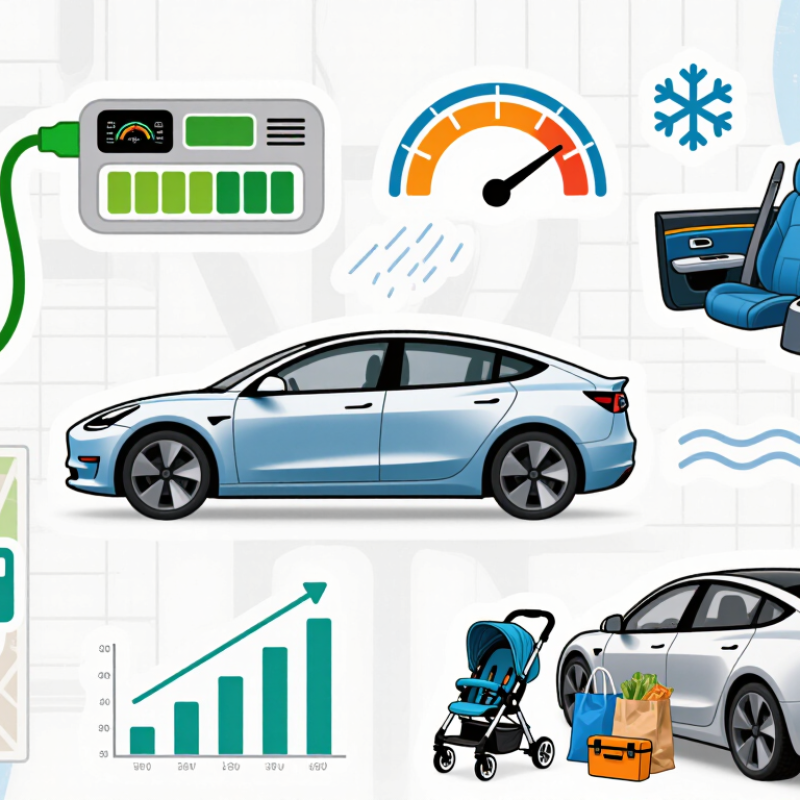
Before comparing electric cars, map a typical week. Note your daily distance, the longest regular trip, and where the car sits overnight. A 28-mile commute with home parking creates different needs from frequent 160-mile drives and street parking. Count passengers, child seats, sports gear, and groceries too. Small details change what feels comfortable. That matters.
Set a total budget, not just a purchase-price limit. Include charging equipment, installation, insurance, routine servicing, and electricity. Ask an electrician for a site-specific installation estimate; older wiring or a long cable route can raise costs. Compare financing terms and check which incentives are currently available in your area. Do not guess. For range, use your longest usual journey as a baseline, then leave room for cold weather, highway speeds, and detours. Check independent road tests and charging-stop times, not only advertised figures. If you cannot charge at home, test nearby public chargers at the hours you would actually use them. Even a careful estimate can miss a frustrating detail, like a charger that is often occupied. Revisit your assumptions before deciding.
How to Choose a Fully Electric Car in 2026? - Define Your Driving Needs and Budget
Use these examples as starting points, not vehicle specifications. Budget figures are broad U.S. dollar planning ranges for the vehicle before taxes, fees, and incentives; prices and availability vary by market.
| Driving profile |
Typical daily driving |
Practical range target |
Indicative vehicle budget |
Charging plan to check |
Mostly urban
Short commutes and errands |
About 15–35 miles (25–55 km) |
Around 200–250 miles (320–400 km) of EPA-rated range can suit many drivers, with extra capacity for occasional longer trips. |
About $25,000–$38,000 |
Regular overnight home charging is convenient. If charging at home is unavailable, check nearby public charging access and pricing. |
Mixed commuting
City and highway use |
About 25–60 miles (40–95 km) |
Around 250–300 miles (400–480 km) EPA-rated range offers a useful buffer for highway driving and less favorable weather. |
About $30,000–$45,000 |
A home Level 2 charger can replenish a typical daily commute overnight; confirm electrical-panel capacity and installation cost. |
Frequent long-distance travel
Regular highway trips |
Often 60+ miles (95+ km), with longer trips several times a month |
Consider roughly 300–350+ miles (480–560+ km) EPA-rated range, and assess fast-charging stops along routes you actually use. |
About $38,000–$60,000+ |
Compare charging-network coverage, charger reliability, and the vehicle’s charging curve; peak charging power alone does not determine stop time. |
No reliable home charging
Apartment or street parking |
Any distance; charging access is the main constraint |
Choose range based on weekly travel, then make sure dependable public chargers are close to home, work, or regular destinations. |
Set a total-cost limit that includes expected public-charging costs. |
Check charger availability, access hours, payment methods, and typical prices before buying. Do not assume a nearby charger is always available. |
Range and budget checks: EPA range is a standardized estimate, not a guarantee of real-world distance. Cold weather, high speeds, heating or air-conditioning, hills, and vehicle load can reduce range; allow a larger buffer if these conditions are common. Compare the total cost of ownership—including insurance, electricity, home-charger installation, and financing—not just the purchase price.
Assess Battery Health, Warranty, and Vehicle Features
How to Choose a Fully Electric Car in 2026?
Assess Battery Health, Warranty, and Vehicle Features
Ask for a recent battery-health report, not just the dashboard range. Compare usable capacity with the original figure, and check cell imbalance when diagnostic data are available. The U.S. Department of Energy’s 2024 summary reported replacement rates of 2.5% for plug-in vehicles from model years 2011–2023, excluding recalls. For 2016–2023 models, the rate was below 1%. Those fleet averages are reassuring, not a verdict on one car. That matters. Heat exposure, long storage, and frequent rapid charging can leave similar-looking cars with different battery histories.
Read the warranty carefully. Check its time and distance limits, capacity-retention threshold, exclusions, diagnostic process, and transfer rules. Ask how battery capacity is measured. Features deserve equal attention. The International Energy Agency’s Global EV Outlook 2024 reported that global public charging stock grew about 40% in 2023. Yet growth does not guarantee a working charger on your winter commute. Test your regular route, cabin heating, rear-seat fit, and luggage space. Try it in the rain. A small but easy-to-miss detail: cold conditions can affect charging speed, so check whether the car can precondition its battery before a fast-charge stop. Advertised range is simple to compare; everyday comfort is not.
How to Choose a Fully Electric Car in 2026
Assess battery health, warranty coverage, and the features that matter for your daily driving.
How to read this chart: Estimates use a 300-mile new-car range and assume range changes in direct proportion to battery state of health (SOH). Actual range varies with temperature, speed, terrain, tires, and vehicle use.
Battery health
Request a battery diagnostic showing SOH, usable capacity, and any fault codes. Compare the result with the vehicle’s original range.
Warranty
Check the remaining time and mileage, what battery-capacity loss is covered, and whether coverage transfers. Terms vary by vehicle and market.
Vehicle features
Confirm real-world range suits your routes, charging compatibility and speed meet your needs, and the cabin, safety, and winter features fit your routine.
Calculate Ownership Costs and Available Incentives
A realistic 2026 electric-car budget starts with more than the purchase price. Compare the total cost over your expected ownership period: monthly payments, electricity, insurance, maintenance, home-charger installation, and resale value. Consumer Reports’ 2020 analysis estimated maintenance and repair costs at about 3 cents per mile for electric cars, compared with 6 cents for gasoline cars. That is useful context, not a promise for every driver. Cold weather, tire wear, and repair costs can change the result.
Estimate charging using your actual electricity rate and weekly mileage. For example, a 250-mile week and a vehicle using 30 kWh per 100 miles requires about 75 kWh, before charging losses. Then get insurance quotes and a charger-installation estimate; those line items are easy to overlook. My own first-pass budgets tend to miss small fees. They add up. For incentives, check current federal, state, local, and utility programs through official government or utility sources. Eligibility may depend on location, income, vehicle price, or purchase date, and programs can change.
Tips: Build a side-by-side spreadsheet for your top choices. Enter your local power rate, expected annual mileage, insurance quote, and charger costs. Show incentives separately, and do not count them until you verify eligibility. Recheck the numbers before signing; an estimate is not a guarantee.
Test-Drive and Compare Suitable Electric Cars
How to Choose a Fully Electric Car in 2026?
Test-drive several suitable electric cars on the same day, if possible. Familiar roads make differences easier to notice. Include a rough street, a faster road, and a tight parking space. Listen for tire noise, check how clearly you can see out, and notice whether the seat remains comfortable after twenty minutes. Small things matter. Try the controls while parked, not while driving. A calm cabin is useful, but awkward door handles or confusing menus may become daily annoyances.
Compare more than acceleration. Check whether the rear seats fit your passengers and whether the cargo area suits your usual bags. Ask how the car’s estimated range changes with cold weather, highway speeds, and cabin heating; published figures do not predict every trip. If home charging is unavailable, plan a realistic public-charging stop and see how easy the charging port is to reach. A single drive can flatter a car, so take notes and repeat the route when a detail feels uncertain.
Tips: Set your seat and mirrors before moving. Test regenerative braking in a safe, familiar area; its feel varies. Bring your everyday items, such as a child seat or work bag. Compare the cars at similar battery levels, and leave time to think before choosing.