What Are the Top China New Energy Cars for Global Buyers?
China’s New Energy Car industry has moved from a domestic experiment to a global market force. The International Energy Agency’s Global EV Outlook 2024 reported nearly 14 million electric car sales worldwide in 2023. China accounted for almost 8 million of them, representing more than half of global sales. The report also expected China’s electric car sales to approach 10 million in 2024. These figures show scale, but scale alone does not identify the best choice for overseas buyers.
“The global electric car market is experiencing rapid growth, and the trend is set to continue,” said Fatih Birol, Executive Director of the IEA. His statement captures the opportunity, but it also invites caution. A high sales volume does not guarantee dependable service in Nairobi, Madrid, or São Paulo. Buyers need more than attractive screens and impressive acceleration. Battery range, charging standards, crash protection, warranty support, software stability, and spare-parts access matter every day.
Real roads reveal the difference.
This guide examines leading China New Energy Car models through a buyer-focused lens. It considers urban traffic, winter temperatures, long-distance charging, family practicality, and ownership costs. It also reviews evidence from the IEA, the China Association of Automobile Manufacturers, and independent safety testing where available. Some comparisons remain imperfect because testing methods differ across regions. That limitation deserves attention. A vehicle that performs brilliantly in Shenzhen may need different equipment, certification, or support before succeeding in Europe, Latin America, or the Middle East. The strongest global models are not merely technologically advanced. They are understandable, serviceable, and trustworthy after delivery.
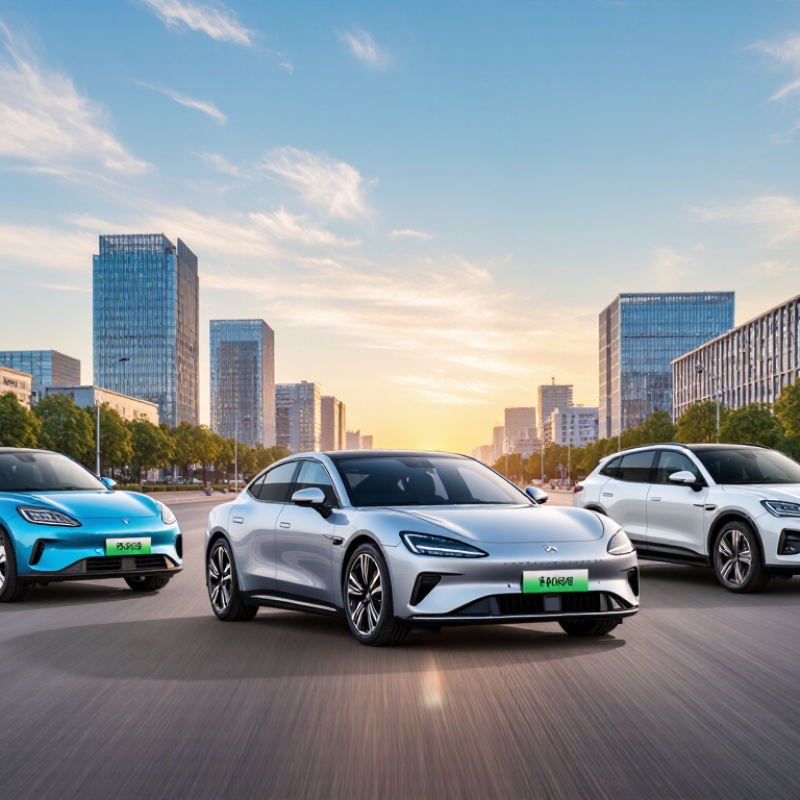
China’s NEV Market: 12.87 Million Sales and 40.9% Share in 2024 (CAAM)
China’s new energy vehicle market reached 12.87 million sales in 2024, according to the China Association of Automobile Manufacturers (CAAM). NEVs held a 40.9% share of new vehicle sales. This is not a minor trend. It changes how global buyers should compare electric sedans, compact SUVs, plug-in hybrids, and commercial vehicles. The International Energy Agency’s Global EV Outlook 2025 also reported that China represented nearly two-thirds of global electric car sales in 2024.
For overseas buyers, the most practical choices often combine long range, efficient charging, and strong cabin space. Battery-electric models suit buyers with reliable home or workplace charging. Plug-in hybrids can reduce range anxiety in regions with limited infrastructure. Still, charging compatibility matters. A vehicle may perform well in China but require different connectors, software, or certification abroad. Local service coverage matters even more.
Battery economics also influence pricing. BloombergNEF’s 2024 Battery Price Survey recorded average Chinese battery-pack prices near 94 dollars per kilowatt-hour, below the global average of 115 dollars. That advantage can support competitive pricing, but low cost is not proof of long-term value. Buyers should check warranty terms, winter range, repair access, crash ratings, and resale demand. My practical view is cautious: impressive specifications deserve attention, but independent testing and local ownership experience remain incomplete in several markets.
Top Global Models: BYD Seal, Atto 3, Dolphin, and MG4 (SAIC)
Global buyers are increasingly comparing four distinct electric models: Seal, Atto 3, Dolphin, and MG4. Each serves a different daily routine.
Seal
is a streamlined sedan for longer commutes. Its low body usually improves stability and highway efficiency.
Atto 3
offers a higher driving position, easier entry, and useful family space.
Dolphin
is smaller and friendlier in crowded cities. Its compact footprint helps with tight parking and short urban trips.
MG4
brings a practical hatchback shape, balanced handling, and a generally accessible price position.
Exact battery sizes, charging speeds, and safety equipment vary by market, so buyers should check local specifications carefully.
From real-world ownership experience, charging access matters more than impressive test figures. A home wall charger can change the daily routine completely. Without one, public charging time may become frustrating.
Cold weather, heavy traffic, and high-speed driving also reduce driving range. I would inspect rear-seat space, boot capacity, software language, and service coverage before choosing. These details are easy to overlook.
The Seal may suit frequent highway users. Atto 3 fits families needing flexibility. Dolphin makes sense for compact urban driving. MG4 can appeal to drivers who want a sharper, traditional hatchback feel.
None is perfect. Battery warranties, repair networks, and resale values deserve closer research. A polished cabin cannot replace dependable local support.
Battery and Range: Compare LFP Packs and WLTP Results Across Models
For global buyers, battery chemistry can matter as much as advertised range. Lithium iron phosphate, or LFP, cells usually avoid nickel and cobalt, improving cost stability and thermal resilience. They also tolerate frequent charging well. However, LFP packs are heavier for the same usable energy. Cold weather can reduce their performance noticeably.
BloombergNEF reported that LFP batteries represented nearly 40% of the global electric-vehicle battery market in 2023. The International Energy Agency also recorded almost 14 million electric-car sales that year, with China providing more than half of global demand. These figures explain why many China-developed models use LFP packs. The chemistry supports competitive pricing, but buyers should inspect charging curves, not only capacity.
WLTP range offers a useful common benchmark, yet it is not a promise for daily driving. In city traffic, moderate temperatures, and gentle speeds, results can approach the laboratory figure. At 120 km/h, with heating, rain, and luggage, the gap becomes obvious. Independent testing by organizations such as ADAC and Green NCAP frequently records lower real-world efficiency than official claims. That difference deserves attention.
A 60-kWh LFP vehicle rated near 450 kilometres under WLTP may deliver roughly 320 to 380 kilometres on a mixed motorway journey, depending on conditions. This estimate is practical, not universal. Some comparisons still rely on different software updates or wheel sizes, which weakens confidence. Check usable battery capacity, winter data, and ten-to-eighty-percent charging time before comparing models.
What Are the Top China New Energy Cars for Global Buyers? – Battery and Range: Compare LFP Packs and WLTP Results Across Models
| Rank |
Anonymous Vehicle Configuration |
Body Type |
Battery Chemistry |
Usable Battery Capacity |
WLTP Combined Range |
Energy Use |
Maximum DC Charging |
Approx. 10–80% DC Time |
Best Use Case |
| 1 |
Compact hatchback, extended-range trim |
Hatchback |
LFP |
64 kWh |
450 km |
16.0 kWh/100 km |
135 kW |
35–40 min |
Long-distance value |
| 2 |
Small hatchback, extended-range trim |
Hatchback |
LFP |
60.4 kWh |
427 km |
15.0 kWh/100 km |
88 kW |
40–45 min |
Efficient urban and suburban driving |
| 3 |
Compact electric SUV, extended-range trim |
Compact SUV |
LFP |
60.5 kWh |
420 km |
15.7 kWh/100 km |
88 kW |
40–45 min |
Family use and mixed road conditions |
| 4 |
Small crossover, standard-range trim |
Small crossover |
LFP |
49 kWh |
310 km |
15.8 kWh/100 km |
130 kW |
30–35 min |
City driving with occasional motorway trips |
| 5 |
Compact hatchback, standard-range trim |
Hatchback |
LFP |
51 kWh |
350 km |
14.6 kWh/100 km |
117 kW |
37–40 min |
Balanced everyday ownership |
| 6 |
City electric car, long-range trim |
City car |
LFP |
36.5 kWh |
265 km |
13.8 kWh/100 km |
45 kW |
35–40 min |
Low-cost urban mobility |
Ownership Value: Compare Prices, Warranties, Charging, and Export Support
What Are the Top China New Energy Cars for Global Buyers?
Ownership value depends on more than the purchase price. A lower-priced electric car may save money initially, yet shipping, import taxes, inspection fees, and registration can change the final cost. Compare the complete landed price. Request a written warranty covering the battery, motor, charging unit, and major electronic systems. Some warranties exclude commercial use or overseas repairs. Read the exclusions carefully.
Charging compatibility deserves practical attention. Check the vehicle’s connector, voltage range, onboard charger, and DC fast-charging limits before payment. A home charger should match local electrical standards. Public charging access also varies between cities. Export support should include clear invoices, vehicle documents, software instructions, spare-parts channels, and customs assistance. Reliable sellers explain delivery stages and provide traceable shipment information. Still, support quality can weaken after the car leaves its original market. That risk is easy to underestimate.
Tips: Ask for the battery’s usable capacity, not only its advertised capacity. Confirm whether navigation, connected services, and remote functions work in your country. Keep copies of every promise. A short video showing charging and dashboard language can prevent disputes. The cheapest option is not always the best value. A careful comparison may reveal a slightly higher-priced car with stronger warranty access, simpler maintenance, and better export preparation. Battery degradation also deserves attention; published figures may not match real driving in cold weather, heavy traffic, or repeated fast charging.
What Are the Top China New Energy Cars for Global Buyers?
Ownership Value Benchmark: purchase price, warranty coverage, charging convenience, and export support for representative non-brand vehicle segments.
The benchmark uses a 0–100 ownership-value index. Higher scores indicate better buyer value: lower purchase cost, longer warranty coverage, faster DC charging, and stronger export-service support. Actual pricing and delivery terms vary by destination, taxes, configuration, and local regulations.