Top Plug In Hybrid SUVs in China for Global Buyers?
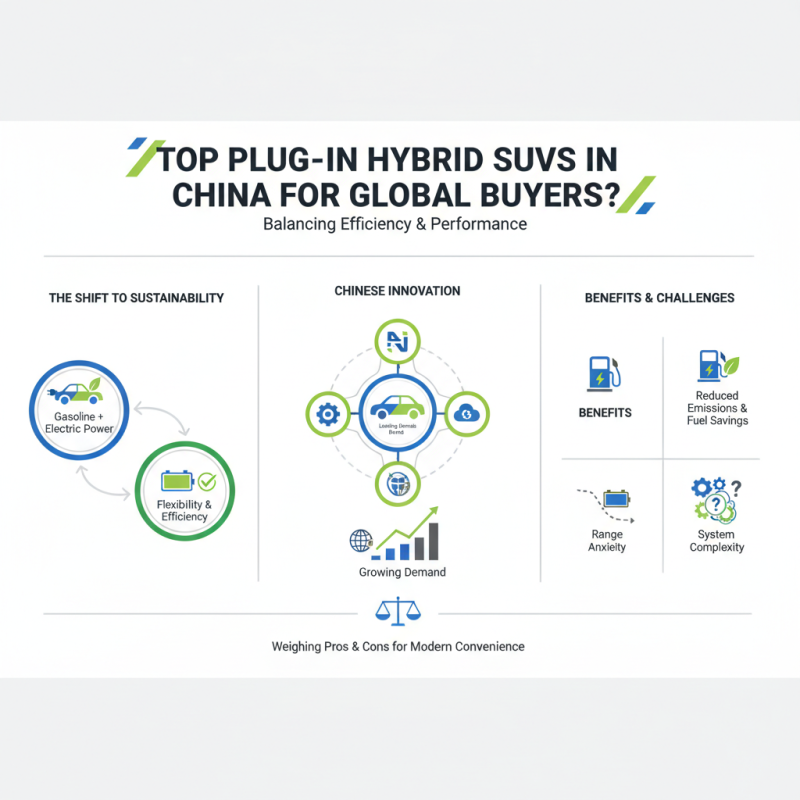
As the automotive market shifts towards sustainability, Plug In Hybrid SUVs have emerged as a popular choice in China. These vehicles combine traditional gasoline engines with electric power, offering flexibility and efficiency. This hybrid technology provides car buyers with options that support eco-friendly practices without sacrificing performance.
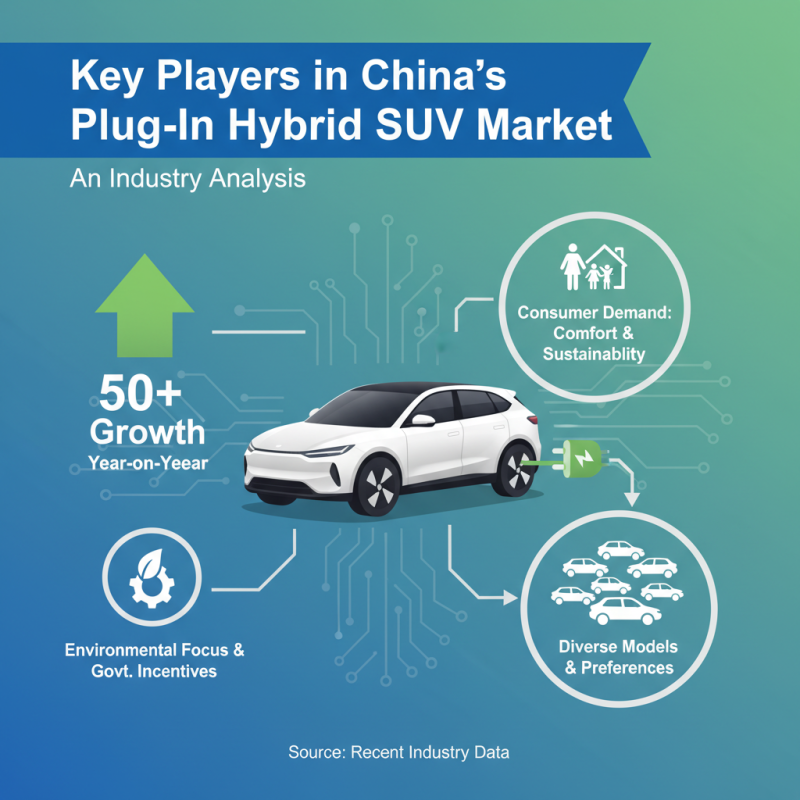
Chinese manufacturers have made significant strides in developing Plug In Hybrid SUVs. Brands such as BYD, NIO, and Geely are leading the way with innovative designs and advanced features. They cater to both domestic and global buyers. The growing demand reflects an increasing awareness of environmental issues and the desire for modern conveniences.
However, challenges remain. Some consumers worry about the range of electric power alone. Others find the complexity of hybrid systems daunting. Despite these concerns, the allure of reduced emissions and fuel savings is hard to ignore. In navigating the diverse landscape, potential buyers must weigh the benefits and drawbacks of these versatile vehicles.
Top Plug-In Hybrid SUVs in China: Market Overview and Trends
The plug-in hybrid SUV market in China is experiencing rapid growth. According to the China Association of Automobile Manufacturers, sales of plug-in hybrids surged by 118% in the first half of 2023. This trend is driven by a demand for environmentally friendly yet powerful vehicles. Global buyers seek these SUVs for their combination of electric and gasoline engines.
One significant trend is the increasing consumer preference for longer electric range. Many new models now offer over 70 kilometers on electric power alone. This allows for more daily commutes without relying on gasoline. Data from industry reports shows that consumers are prioritizing efficiency alongside performance. However, there remain challenges, such as the need for widespread charging infrastructure, particularly in rural areas.
Tip: Consider your driving habits before choosing a plug-in hybrid SUV. Evaluate how much electric range you typically need. Some users may find that certain models do not meet their daily requirements, leading to underutilization of electric capabilities. It's essential to weigh these factors against your lifestyle for an informed decision.
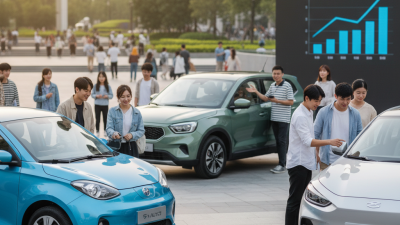
Top Plug-In Hybrid SUVs in China: Sales Overview (2023)
Performance Metrics: Comparing Efficiency and Range of Leading Models
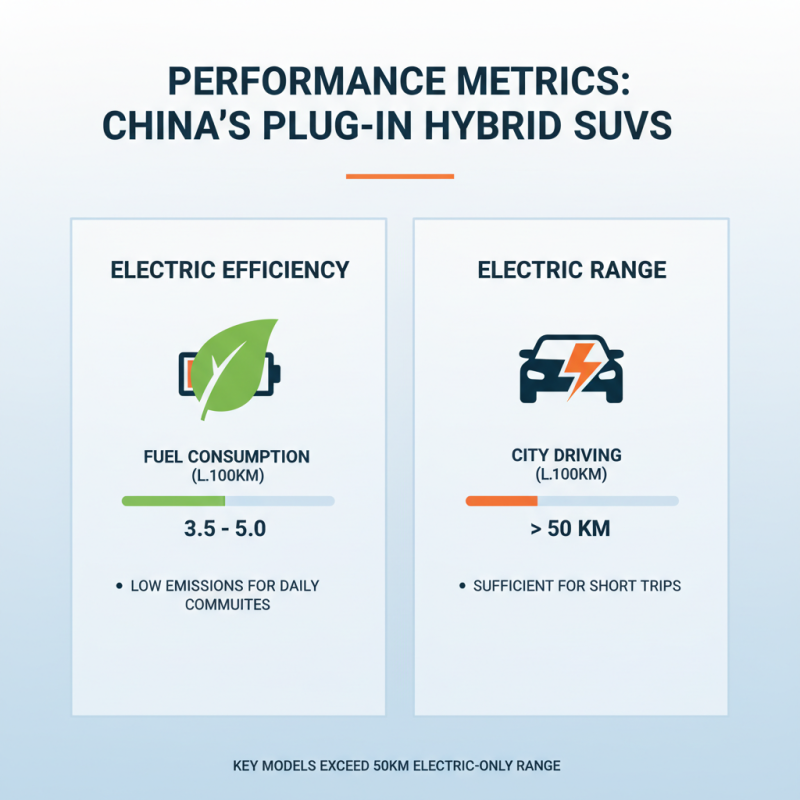
When examining plug-in hybrid SUVs in China, efficiency and range stand out as critical metrics. Many models are designed to balance power with environmental considerations. The electric range is particularly impressive in some popular SUVs, often exceeding 50 kilometers. This allows for short daily commutes without relying on gasoline.
Performance metrics vary greatly. Some SUVs achieve remarkable fuel efficiency, boasting less than 2 liters per 100 kilometers in hybrid mode. This makes them suitable for both city driving and longer road trips. However, potential buyers should note that real-world performance may differ from manufacturer claims. Weather, driving habits, and terrain can all impact efficiency.
Range anxiety remains a concern. While many models offer substantial electric range, charging infrastructure can be sparse in certain areas. The quality of battery technology is also a critical aspect. Some vehicles may experience degradation over time. Buyers should consider these factors for a more informed decision. There may be trade-offs between power and sustainability that require careful thought.
Consumer Preferences: Factors Driving the Adoption of PHEVs in China
The rise of plug-in hybrid electric vehicles (PHEVs) in China showcases an intriguing shift in consumer preferences. A recent industry report reveals that nearly 40% of car buyers indicated they would choose PHEVs for their eco-friendly features. This trend reflects a growing awareness of sustainability and rising fuel prices. In urban regions, where charging infrastructure is improving, consumers seek the benefits of electric driving with the flexibility of gasoline-powered engines.
Tips: Consider local incentives when purchasing a PHEV. Government subsidies can significantly lower the overall cost, enhancing value for buyers.
Another factor is the performance of PHEVs. Many consumers appreciate the extended range these vehicles offer. Unlike fully electric models, PHEVs provide the reassurance of a gas engine for long trips. Reports indicate that about 60% of PHEV owners feel more confident taking longer journeys, contrasting with the range anxiety that often accompanies electric vehicle ownership.
Tips: Test-drive various models to find the best fit for your needs. Different vehicles offer varying features that can enhance comfort and driving experience.
Nevertheless, challenges remain. Charging infrastructure still lags behind demand in many regions. Some consumers express concerns over maintenance costs and battery lifespan. Addressing these issues will be crucial as China pushes for greener transportation methods. As the market evolves, potential buyers should remain informed about advancements and updates.
Top Plug In Hybrid SUVs in China for Global Buyers
| Model |
Electric Range (km) |
Fuel Efficiency (L/100km) |
Battery Capacity (kWh) |
Price Range (CNY) |
| SUV Model A |
60 |
5.0 |
15 |
200,000 - 300,000 |
| SUV Model B |
70 |
4.5 |
18 |
250,000 - 350,000 |
| SUV Model C |
80 |
6.0 |
20 |
220,000 - 320,000 |
| SUV Model D |
50 |
5.5 |
14 |
210,000 - 310,000 |
| SUV Model E |
90 |
4.0 |
22 |
230,000 - 330,000 |
Future Outlook: Predictions for Plug-In Hybrid SUV Adoption in China
The rise of plug-in hybrid SUVs in China points to a significant transformation in the automotive landscape. With government policies promoting electric vehicles, companies are investing heavily in this segment. The appeal lies in their flexibility to switch between electric and gasoline power. This adaptability addresses range anxiety, a common concern among potential buyers.
Despite these advancements, challenges remain. Infrastructure for charging stations is still in the developmental phase. Urban areas may have better access, but rural regions are lagging. Additionally, there is skepticism about the long-term benefits of hybrid models compared to fully electric vehicles. Consumers often question if hybrids truly reduce emissions as promised. Educating the public on the advantages and limitations of plug-in hybrids will be crucial for broader acceptance.
Looking ahead, the demand for plug-in hybrid SUVs is expected to grow. As more consumers prioritize sustainability, manufacturers are likely to enhance their offerings. However, transparency about technology and environmental impact will be vital. Addressing consumers' doubts can strengthen trust in this evolving market. Continued innovation will determine how quickly and effectively plug-in hybrids can take hold in China.