Top Ev Cars for 2026 What to Look for in Electric Vehicles?
The electric vehicle (EV) market is evolving rapidly. By 2026, we expect significant growth in EV cars. According to a report from BloombergNEF, global EV sales could reach 30 million units annually by 2030. This shift indicates a strong consumer demand for cleaner alternatives to traditional combustion engines.
Potential buyers should consider key factors when choosing EV cars. Range, battery efficiency, and charging infrastructure are vital. The average EV range is increasing, with many models exceeding 300 miles on a single charge. Yet, charging options vary widely by location. Understanding these aspects is essential for making informed choices.
However, the landscape is not without challenges. Issues such as battery production impacts and recycling processes need attention. Moreover, infrastructure is still catching up with demand in many areas. Buyers should weigh these factors carefully. Awareness of these evolving dynamics can help consumers navigate the complexities of the EV market.

Key Features to Consider When Choosing an Electric Vehicle
When choosing an electric vehicle (EV), several key features come into play.
Range is crucial; the average EV can travel 250 to 370 miles on a single charge.
However, not all drivers need such range. Many daily commutes are under 50 miles. Understanding personal needs is essential.
Look deeper into charging infrastructure in your area.
Some regions have robust networks, while others lag behind.
Battery technology is another important aspect.
Lithium-ion batteries dominate the market, but new alternatives are emerging.
Solid-state batteries offer potential breakthroughs in performance and safety.
Still, these technologies are not widely available yet.
Keep an eye on developments in this field to make informed choices in the coming years.
Cost is a decisive factor in your decision.
The average price for an EV has risen, reaching approximately $66,000 in early 2023.
Various incentives and rebates can mitigate these costs.
However, maintenance and operational savings can balance higher upfront prices.
Evaluate your budget carefully, and consider total lifetime expenses when assessing value.
Awareness of these elements prepares you for smart decision-making in the evolving EV landscape.
Emerging Technologies in Electric Vehicle Design for 2026
As we look towards 2026, the landscape of electric vehicle (EV) design is changing rapidly. Emerging technologies are at the forefront. One notable trend is the development of solid-state batteries. These batteries offer greater energy density and faster charging times. They could revolutionize how we think of range anxiety. Imagine charging your car in just minutes.
Another exciting advancement is vehicle-to-grid technology. This allows EVs to send energy back to the grid. It enhances energy management and provides a backup during outages. However, the implementation is complex and requires further refinement. It raises questions about the infrastructure needed to support this shift.
In addition, artificial intelligence is becoming pivotal in EV design. AI can optimize battery usage and improve safety features. Yet, reliance on technology also brings challenges. Data privacy issues may arise, and algorithms need constant monitoring. Balancing innovation with accountability is essential as we move forward.
Top EV Cars for 2026: What to Look for in Electric Vehicles?
| Model |
Range (miles) |
Charging Time (0-80%) |
Battery Capacity (kWh) |
Price ($) |
| Electric Sedan A |
350 |
30 mins |
75 |
45,000 |
| Electric SUV B |
400 |
35 mins |
90 |
55,000 |
| Electric Hatchback C |
300 |
25 mins |
60 |
35,000 |
| Electric Truck D |
500 |
50 mins |
100 |
70,000 |
| Electric Sports Car E |
320 |
20 mins |
80 |
90,000 |
Top Electric Vehicle Models to Watch for in 2026
As we look ahead to 2026, the electric vehicle (EV) market is poised for significant evolution. Industry reports suggest that global EV sales could reach 30 million units by 2026, driven by improved technology and infrastructure. Battery technology continues to advance, promising longer ranges and quicker charging times, which are critical factors for consumer adoption.
Emerging models are expected to feature enhanced autonomous driving capabilities. Reports indicate that about 25% of new EVs will likely offer Level 3 autonomy. This level means drivers can safely take their hands off the wheel under certain conditions. However, consumer skepticism remains. Safety debates linger over reliance on automated systems.
Charging infrastructure also plays a key role. Approximately 70% of potential EV buyers cite range anxiety as a major barrier. To address this, cities plan to double the number of public charging stations by 2026. Still, accessibility and reliability are concerns that need ongoing evaluation. Fluctuations in charging time and availability can deter potential buyers, reflecting the necessity for continued improvements in the EV ecosystem.
Environmental Impact and Sustainability of Future EVs
The environmental impact of electric vehicles (EVs) is a critical factor in their adoption. Studies indicate that while EVs produce lower emissions during their lifespan, the production of batteries can be resource-intensive. For instance, the extraction of lithium and cobalt poses significant ecological concerns. Mining these materials often leads to habitat destruction and water scarcity. In 2022, it was estimated that battery production contributed to 30% of the total lifecycle emissions of an EV.
Sustainability must be a top priority as the industry evolves. Research reveals that by 2030, the demand for EV batteries will increase by nearly 20 times. This surge raises questions about raw material sourcing and recycling processes. Currently, less than 5% of lithium-ion batteries are recycled effectively. Improving recycling technology is essential. It can reduce dependence on new materials and lower emissions associated with battery production.
Furthermore, the energy sources used to charge EVs significantly impact their overall sustainability. If the electricity comes from fossil fuels, the advantages of driving an EV diminish. In transition to renewable energy, a multi-faceted approach is needed. Policymakers, industry leaders, and consumers must work collaboratively. Creating a truly sustainable EV ecosystem requires addressing the complexities of material sourcing, production, and energy consumption.
Market Trends Influencing Electric Vehicle Development in 2026
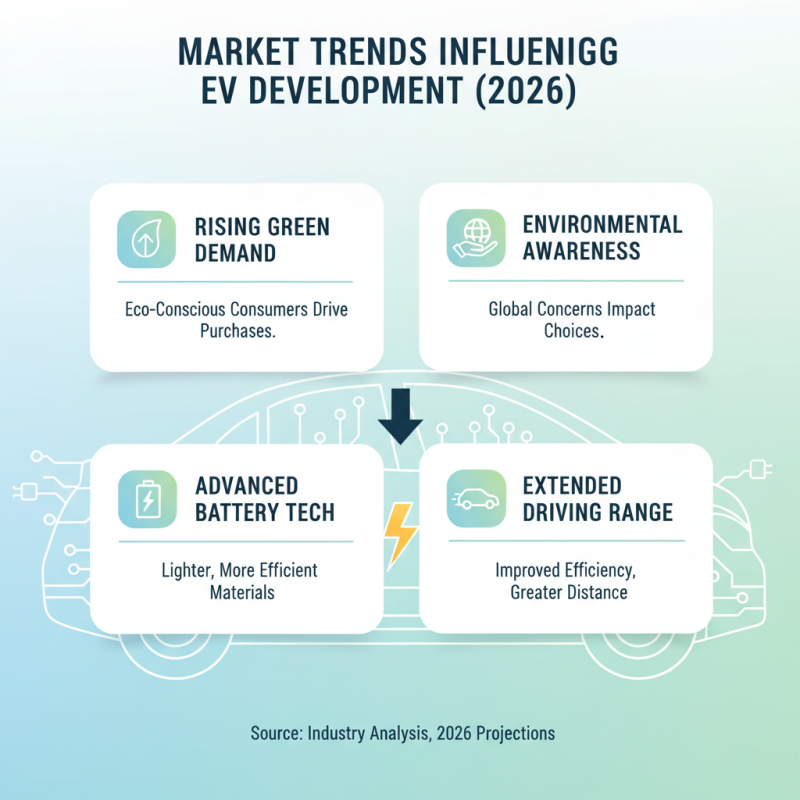
As we advance toward 2026, electric vehicles (EVs) are set to undergo significant transformations. The demand for greener transportation is rising. Consumers are becoming more aware of environmental issues. This awareness influences their purchasing choices. Factors like battery technology are evolving rapidly. New materials are making batteries lighter and more efficient. These changes could extend driving ranges.
Market trends play a crucial role in shaping EV development. Governments are increasing incentives for electric cars. Many cities are investing in charging infrastructure. This accessibility encourages more drivers to consider EVs. Moreover, sustainability is becoming a focal point for manufacturers. They face pressure to minimize their carbon footprints. That often leads to innovation, albeit sometimes at a higher cost. It raises questions about the affordability of future models.
Consumers also seek more features in EVs. They want advanced technology and user-friendly interfaces. However, not all manufacturers meet these expectations effectively. Some models may lack essential functionalities, leaving buyers disappointed. It's clear that the landscape is evolving, but challenges remain. Keeping up with trends while ensuring quality is an ongoing struggle in the industry.