Fully Electric Cars Essential Tips for Global Buyers?
The rise of fully electric cars is transforming the automotive landscape. According to a report by the International Energy Agency, global electric vehicle sales surged by 40% in 2020, despite the pandemic. This trend reflects a growing awareness of environmental issues and advancements in technology.
Yet, potential buyers must navigate several challenges. Charging infrastructure can be inconsistent in different regions. Additionally, battery life and range anxiety remain concerns. Various studies indicate that many consumers still hesitate to switch from traditional vehicles due to these issues.
Despite these hurdles, the benefits of fully electric cars are compelling. They offer lower operating costs and reduced emissions. As technology advances, the market will likely see improved vehicle performance and more accessible charging options. Buyers should stay informed and consider their local context before making a decision.
Understanding Fully Electric Cars: An Overview for Buyers
Understanding fully electric cars requires an informed approach. These vehicles are gaining traction due to their eco-friendly nature. They emit no tailpipe emissions and contribute to cleaner air. However, potential buyers should consider several factors to make wise decisions.
Tip 1: Assess your driving needs. If most of your trips are short, an electric car could suit you perfectly. Long-distance driving might require more planning and access to charging stations.
Charging infrastructure varies greatly between locations. In some areas, charging stations are abundant, while in others, they can be few and far between. Research local charging options before purchasing.
Tip 2: Understand battery range. Most electric cars have a sufficient range for daily use, yet some models can struggle on longer journeys. Investigate the range of different models to find one that fits your lifestyle.
Consider tax incentives and rebates. Electric vehicles often come with benefits that can ease the purchase price. However, these incentives can change, so stay updated on current regulations.
Buying a fully electric car is a significant commitment. Weigh the environmental benefits against the practicalities. Make sure it aligns with your lifestyle and values.
Fully Electric Cars Essential Tips for Global Buyers
| Feature |
Description |
Importance |
Considerations |
| Battery Range |
The distance a fully electric car can travel on a single charge. |
Crucial for determining daily usability and travel plans. |
Check charging stations along your route and daily driving habits. |
| Charging Time |
Time required to fully charge the vehicle from empty. |
Affects convenience and suitability for users with limited time. |
Consider if fast charging options are available in your area. |
| Cost of Ownership |
Includes purchase price, insurance, maintenance, and charging costs. |
Essential for budgeting and long-term financial planning. |
Evaluate available incentives, tax credits, and reduced maintenance costs. |
| Environmental Impact |
Reduction of greenhouse gas emissions compared to traditional vehicles. |
Significant for environmentally conscious consumers. |
Consider the source of your electricity and battery recycling options. |
| Incentives and Tax Credits |
Government incentives to lower the effective purchase price. |
Can substantially reduce the overall cost. |
Research local and national programs that apply to electric cars. |
Key Features to Consider When Buying an Electric Vehicle
When looking to buy a fully electric vehicle (EV), several key features are vital to consider. Battery range is one of the most important. A longer range means less frequent charging. Some models offer over 300 miles, while others may fall short. Assess your daily driving habits to determine what range you need. Think about how far you travel routinely.
Charging options are another crucial aspect. Explore the availability of home charging stations and public charging networks. The charging speed varies by model. Some can reach 80% charge in just 30 minutes, while others may take much longer. This can significantly impact your routine.
Lastly, consider the technology features. Many electric cars come with advanced safety systems and infotainment options. Ensure the vehicle has features that enhance your driving experience, such as lane-keeping assistance and navigation. However, don’t get too caught up in tech options. Simplicity can be key for some buyers. Always reflect on what truly matters for your needs, rather than getting overwhelmed by the latest gadgets.
Evaluating Charging Options: Home, Public, and Fast Charging Solutions
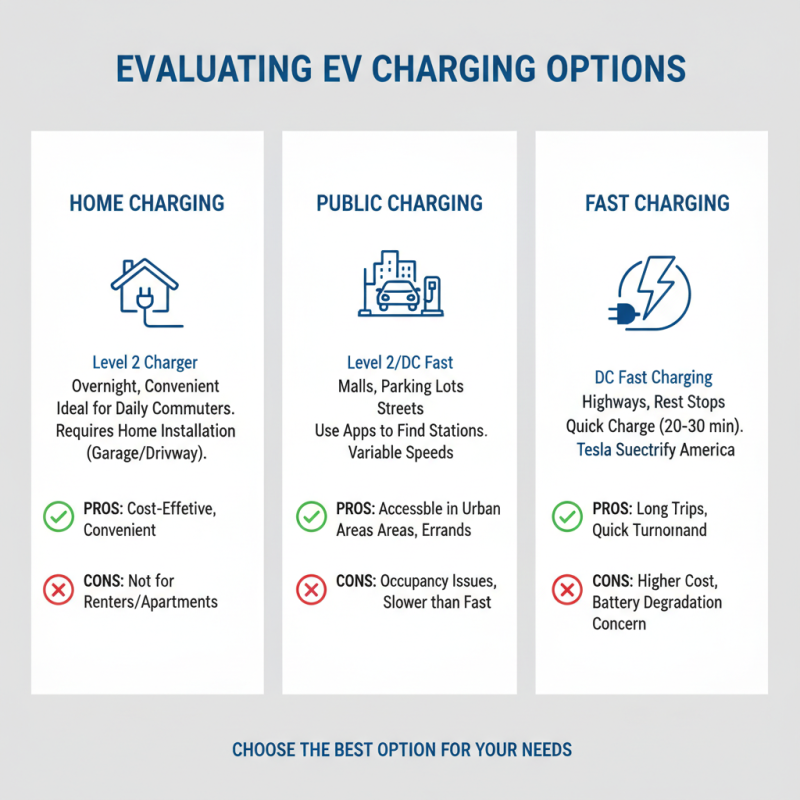
When it comes to fully electric cars, understanding charging options is crucial. Home charging offers convenience. Installing a Level 2 charger at home allows overnight charging. This option suits daily commuters well. However, not everyone can charge at home, especially in urban areas.
Public charging stations provide flexibility. Many are available in shopping centers and workplaces. Be aware that charging speeds can vary significantly. Level 1 chargers take the longest, while Level 3 fast chargers can replenish your battery quickly. It’s important to plan your trips according to the nearest charging stations.
Consider these tips: always check the charging network coverage in your area. Download relevant apps for location and availability. Some charging stations require subscriptions, so read the terms closely. Keeping an eye on charging costs is also important; these can add up over time. Lastly, don't forget to think about the future—charging infrastructure is still evolving.
Cost of Ownership: Price, Incentives, and Long-Term Savings
The cost of ownership for fully electric cars has been a key concern for potential buyers. Electric vehicles (EVs) benefit from lower fueling costs. The average cost to charge an EV is about $0.14 per kilowatt-hour in the U.S. This can lead to savings of up to $800 annually compared to gasoline cars. However, factors such as local electricity rates can vary widely. It’s essential to consider these variances when calculating your potential savings.
Incentives also play a critical role in reducing the purchase price of electric vehicles. Many regions offer tax credits or rebates that can range from $2,500 to $7,500 based on local regulations. Studies indicate that these incentives can significantly offset initial costs. Yet, navigating these incentives can be overwhelming for new buyers, and availability may fluctuate.
Long-term savings are an attractive part of owning an EV. Maintenance costs are generally lower, as EVs have fewer moving parts. Data from industry reports show an average maintenance cost of $300 per year for EVs, compared to $1,200 for conventional vehicles. The challenge lies in the upfront investment, which can be substantial. Buyers should weigh these factors, recognizing that while the overall cost of ownership can be beneficial, variability in incentives and energy costs can impact calculations.
Cost of Ownership for Fully Electric Cars
This bar chart provides an overview of the estimated costs associated with owning a fully electric car. It includes the initial purchase price, annual maintenance costs, fuel costs, available incentives, and potential resale value, all of which play a crucial role in determining the overall cost of ownership for global buyers.
Environmental Impact: The Benefits of Choosing Electric Cars
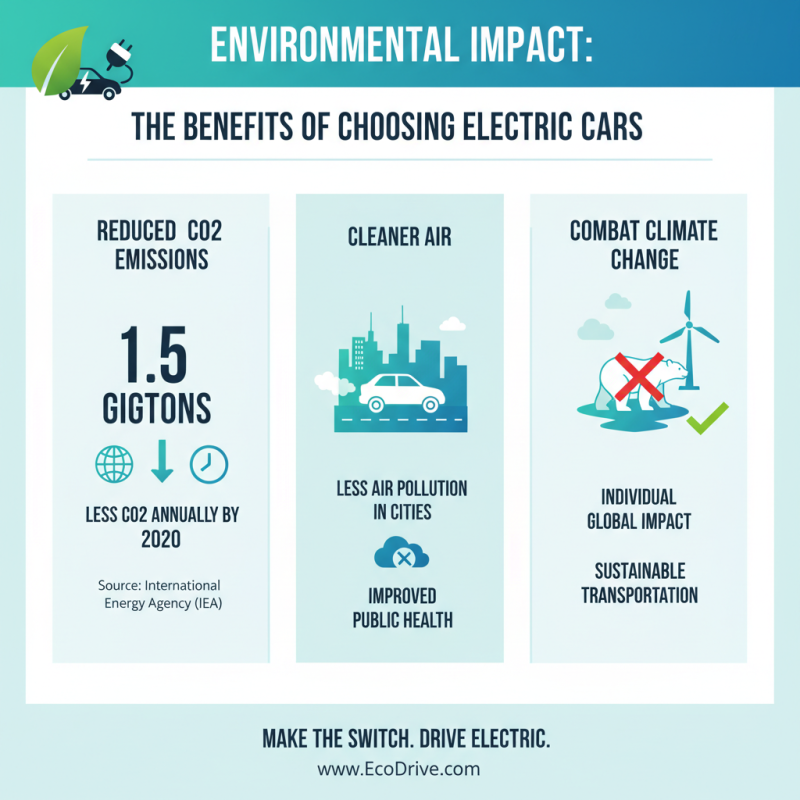
Electric vehicles (EVs) are becoming a crucial choice for environmentally conscious consumers. A report from the International Energy Agency (IEA) indicates that EVs could reduce global CO2 emissions by 1.5 gigatons annually by 2030. This is significant, as transportation is a major contributor to air pollution. By choosing electric cars, buyers can directly impact their local environment and combat climate change.
Electric cars utilize cleaner energy sources. Many EVs can be charged using renewable energy, such as solar or wind. According to a study published by the Union of Concerned Scientists, the average EV produces less than half the emissions of a conventional car over its lifetime. However, the production of EV batteries does raise environmental concerns. Mining for lithium and cobalt can cause ecological damage.
Consumers need to weigh these factors carefully. The transition to electric vehicles is not flawless. Energy sources for charging must also be clean. Infrastructure varies widely across regions, affecting the viability of EVs for some buyers. Overall, the shift to electric cars has potential benefits. But it requires critical evaluation and ongoing improvements in production and energy sourcing.