How to Choose the Best PHEV SUV for Your Needs?
Choosing the right PHEV SUV is crucial for modern drivers. Plug-in hybrid electric vehicles (PHEVs) have gained significant market traction. In 2022, PHEVs represented over 7% of total U.S. vehicle sales, according to industry reports. These cars offer a balance between electric efficiency and gasoline power. This is attracting eco-conscious consumers.
Selecting a PHEV SUV involves understanding personal needs. Consider factors like driving habits, budget, and available incentives. For instance, many states offer tax credits for PHEV purchases. This can make ownership more affordable. However, some consumers may feel overwhelmed by the choices available. Each model has unique features and performance capabilities.
The PHEV SUV market is evolving rapidly. It can be challenging to track the latest trends. Some drivers may prioritize fuel economy, while others might focus on technology features. Reflect on what matters most to you. Researching these aspects helps in making an informed decision. Ultimately, understanding what you need is vital.
Understanding PHEV SUVs: Definition and Key Features
Plug-in Hybrid Electric Vehicle (PHEV) SUVs are gaining popularity. But what exactly are they? PHEV SUVs combine traditional gasoline engines with electric motors. This setup allows for improved fuel efficiency and reduced emissions. According to industry reports, this vehicle category can reduce CO2 emissions by up to 40% compared to conventional SUVs.
Key features of PHEV SUVs include an electric-only driving mode. In this mode, drivers can travel around 20 to 50 miles on electricity alone. This means fewer trips to the gas station. However, the total driving range typically includes the gasoline engine as well. Many PHEV SUVs take around two hours to recharge on a standard 240-volt outlet. This is something to consider if you plan on long trips.
When choosing a PHEV SUV, think about your driving habits. Will you use it mainly for short commutes? If so, you may maximize electric-only driving. However, some drivers might find the battery range limiting. While PHEVs offer flexibility, they may not completely replace gas engines for everyone. Balancing fuel efficiency with your needs is crucial in the decision-making process.
How to Choose the Best PHEV SUV for Your Needs?
| Feature |
Description |
Importance |
| Electric Range |
Distance the vehicle can travel on electric power alone. |
High |
| Fuel Efficiency |
Combined mpg rating when using both electric and gasoline. |
Very High |
| Cargo Space |
Amount of storage available in the trunk and rear area. |
Medium |
| Charging Options |
Availability of charging stations and home charging capabilities. |
High |
| Maintenance Cost |
Estimated costs for upkeep and service. |
Medium |
| Safety Features |
Available advanced safety technologies like lane assist and collision warning. |
High |
| Seating Capacity |
Number of seats in the vehicle. |
Medium |
| Warranty |
Length and coverage of the manufacturer’s warranty. |
High |
Assessing Your Driving Needs: Daily Commute vs. Long Trips
When choosing a PHEV SUV, understanding your driving needs is essential. Are you commuting daily or planning longer trips?
A report from the U.S. Department of Energy states that 42% of daily drives are less than 10 miles.
If your commute falls within this range, a PHEV SUV with a solid electric range can significantly reduce fuel costs.
For long trips, consider the SUV’s hybrid efficiency. Many PHEVs can switch to gasoline seamlessly when the battery is low.
Data from the EPA shows that some models can achieve up to 500 miles on a full tank and battery charge combined.
This flexibility can eliminate range anxiety during family vacations or road trips.
Tips: Evaluate your daily schedule. If you rely on public charging stations, ensure they are conveniently located.
Look for models that offer regenerative braking, which can improve efficiency. Lastly, think about your lifestyle. If road trips are frequent, prioritize models with
spacious interiors and ample cargo space.
Many find it challenging to balance electric range with gasoline performance. Reflecting on your driving habits can provide clarity. Be open to experimenting with different PHEV models.
Understanding how you use your vehicle greatly impacts your ultimate choice.
Evaluating Electric Range and Fuel Efficiency in PHEV SUVs
When choosing a plug-in hybrid electric vehicle (PHEV) SUV, electric range is crucial. Many PHEVs offer about 20 to 50 miles of electric-only driving. A recent report from the International Energy Agency highlights that around 30 miles meets the daily commute needs of over 50% of drivers. This fact emphasizes the importance of assessing your daily travel. A PHEV with a range that suits your routine can reduce the need for gasoline.
Fuel efficiency metrics also play a significant role. PHEVs typically have a combined miles per gallon (MPG) rating ranging from 70 to 100 MPGe. However, not all models perform the same when transitioning from electric to gasoline. Data from the U.S. Department of Energy suggests that some PHEVs achieve lower fuel efficiency beyond the electric range. This means they could potentially have higher operating costs if used inefficiently. Pay attention to both electric range and fuel efficiency to find a balance that fits your lifestyle.
Evaluate real-world reports and online reviews. User experiences often highlight discrepancies between advertised ranges and actual performance. Many drivers reveal that real-world electric ranges are often lower in cold weather or extensive use of air conditioning. Reflecting on these factors can guide your choice towards a PHEV SUV that genuinely meets your driving needs.
Comparing Charging Options: Home vs. Public Charging Stations
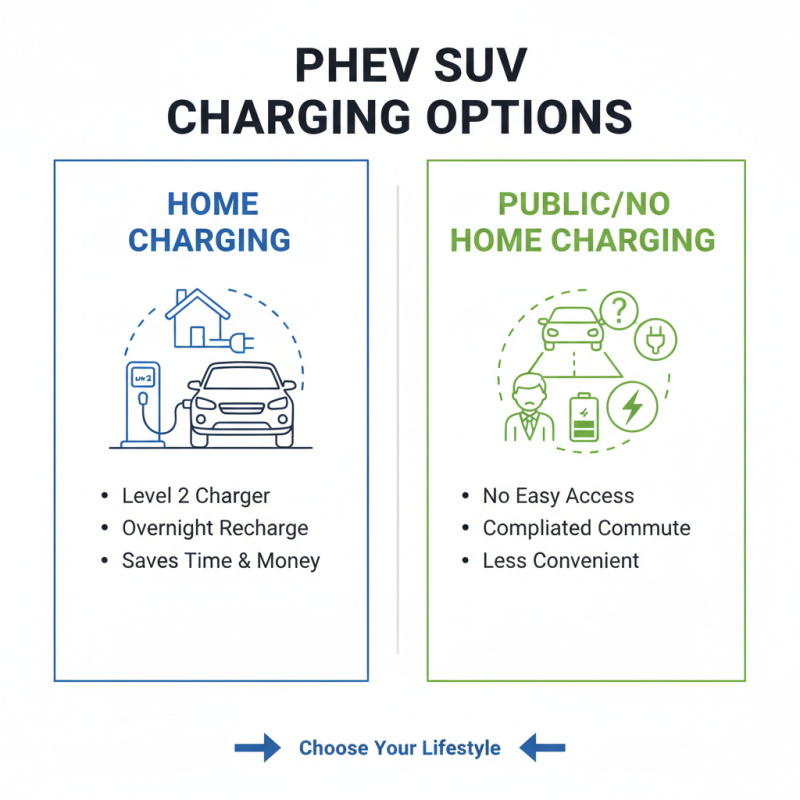
When selecting a plug-in hybrid electric vehicle (PHEV) SUV, choose the right charging option for your lifestyle. Home charging is convenient. Install a Level 2 charging station. It can recharge your vehicle overnight. This method saves time and can lower costs. However, not every home has easy access to charging infrastructure. Without it, daily commutes become complicated.
Public charging stations offer flexibility. They can be found in many locations, like shopping malls or office buildings. Some stations even feature fast charging. You can recharge quickly while running errands. Yet, these stations can be busy. Waiting times may vary. You could find yourself planning trips around charging access. This can be frustrating.
Consider your routine. Do you drive long distances often? A mix of both home and public charging may work best. With the right approach, you can enjoy the benefits of a PHEV SUV. But reflect on your daily habits. What fits within your lifestyle? This decision impacts your overall experience. Choose wisely.
Budget Considerations: Initial Cost vs. Long-Term Savings
When considering the purchase of a plug-in hybrid electric vehicle (PHEV) SUV, budget plays a crucial role. The initial cost can be daunting. Many PHEV SUVs may come with a higher sticker price than traditional models. However, it’s essential to look beyond that number. You might pay more upfront, but you could save money in the long run. The lower fuel costs can make a difference.
Consider how much you drive. If you commute daily, savings on fuel can accumulate. Also, factor in maintenance. PHEVs often require less maintenance than conventional combustion engines. Still, some repairs can be pricey. It's worth researching average costs. Tax incentives and rebates can help ease the initial burden, but they vary by location.
Reflect on your lifestyle. Is the higher initial investment justifiable? For some, it may be. For others, it may not be a good choice. Analyze your financial situation and choose wisely. Balancing initial costs with potential savings can lead to the right decision for you.