How to Choose the Best Electric Vehicles for Your Business?
Electric Vehicles (EVs) are transforming the way businesses operate. According to a report by McKinsey & Company, the global EV market is expected to reach $800 billion by 2027. This shift highlights the urgency for businesses to adapt and embrace sustainable practices. Choosing the right electric vehicle can lead to significant cost savings and improved efficiency.
Industry expert Dr. Emily Nelson emphasizes, “Businesses that integrate electric vehicles into their fleets will not only reduce emissions but also enhance their brand image.” This insight reinforces the strategic importance of selecting the best EV options available. However, the decision-making process can be complex, often filled with uncertainties and various factors to consider.
Understanding the unique needs of your business is critical. Factors like cost, charging infrastructure, and vehicle range play pivotal roles. As companies navigate the EV landscape, making informed choices will become increasingly essential. The combination of industry data and expert opinions can guide businesses in this essential transition.
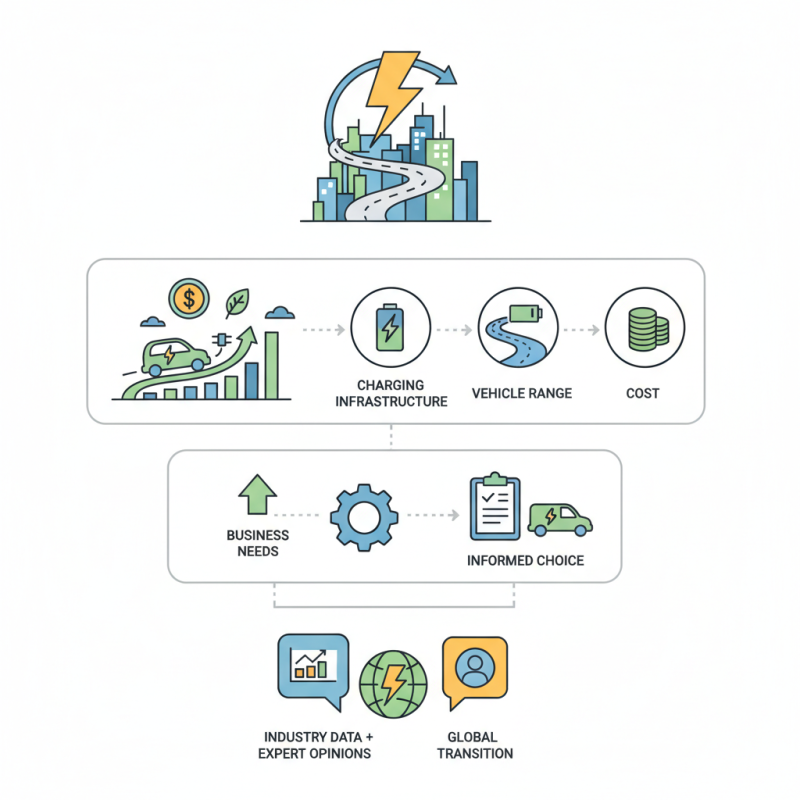
Identifying Your Business Needs for Electric Vehicles
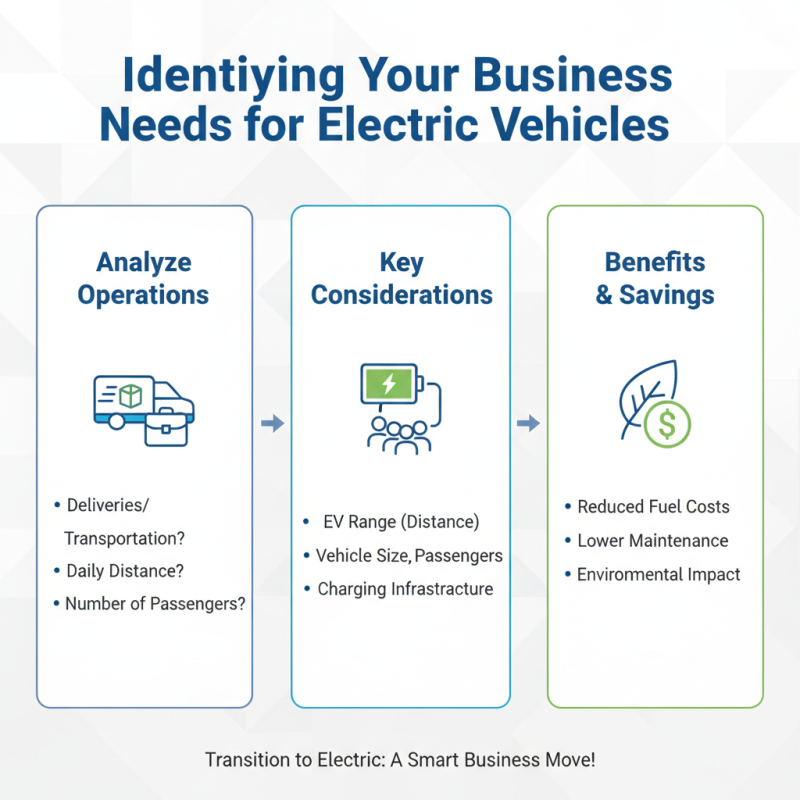
Identifying your business needs for electric vehicles (EVs) is crucial. Start by analyzing your operations. Do you require vehicles for deliveries or transportation? Determine the distance your fleet will cover daily. This will help you select the right EV range. Consider the number of passengers as well. Larger vehicles may be necessary for transporting multiple employees.
Evaluate your budget and long-term costs. Initial prices for EVs can be higher than traditional vehicles. However, maintenance and fuel savings often make them cost-effective. Consider charging infrastructure too. Do you have charging stations at your facility? If not, this could significantly add to your costs.
It’s also essential to assess your commitment to sustainability. How will adopting EVs align with your company’s environmental goals? Reflect on the message it sends to clients and employees. The choice should resonate with your core values. Balancing practicality and ideals may require ongoing adjustments. Flexibility in your approach will help you adapt as your needs evolve.
Evaluating Different Types of Electric Vehicles Available
When evaluating different types of electric vehicles (EVs) for your business, it's essential to consider various factors that can impact your operations. According to a recent industry report by the International Energy Agency (IEA), global EV sales surged by 40% in 2021, indicating a strong shift toward electric mobility. Companies must analyze their needs, such as vehicle range, charging infrastructure, and total cost of ownership.
Light-duty trucks and vans often serve specific business demands. A fleet of delivery vans could benefit from vehicles with ranges of over 200 miles. This range allows for daily routes without frequent recharging. Additionally, the electric fleet can significantly reduce fuel costs, as data from the U.S. Department of Energy shows that driving an electric vehicle can be 60% cheaper than gasoline alternatives.
However, integrating EVs poses challenges. Businesses need to ensure adequate charging stations. Without a reliable charging network, operations may face delays. Moreover, some existing EV models may lack the payload capacity required for certain industries. Regular assessment of available models and understanding their specific applications can lead to a more informed decision. Adapting to electric mobility can be complex, but the data suggests that the shift is not just beneficial but necessary for sustainable growth.
Understanding Total Cost of Ownership for Electric Vehicles
When considering electric vehicles (EVs) for your business, understanding the Total Cost of Ownership (TCO) is crucial. TCO includes all costs associated with owning and operating an EV over its lifespan. This encompasses purchase price, maintenance, insurance, energy expenses, and even potential tax incentives. While upfront costs might seem high, ongoing expenses often reveal significant savings.
Businesses can benefit from lower fuel costs, as electricity is typically cheaper than gasoline. EVs also require less maintenance due to fewer moving parts, which can reduce repair costs. Consider the lifespan of the vehicle and the batteries. If you plan to keep the vehicle long-term, the savings on fuel and maintenance will become clearer.
However, not all businesses will experience the same TCO. Factors like local energy prices, charging infrastructure, and specific operational needs play significant roles. A company operating in an area with limited charging options may face challenges. Additionally, fluctuating energy prices can impact overall costs. It’s important to reflect on these variables when evaluating the long-term feasibility of EV investments for your business.
Assessing Charging Infrastructure Requirements for Your Business
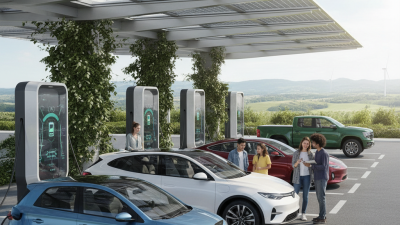
When considering electric vehicles (EVs) for your business, evaluating your charging infrastructure is crucial. You'll need to assess your current setup and potential upgrades. Does your location provide easy access to charging stations? If not, creating an in-house solution may be necessary.
Tips: Conduct an audit of your site to identify optimal charging locations. Consider factors like vehicle access and parking patterns. Engaging with local energy providers can help you understand available options.
Battery life and charging times can vary widely. Understanding these factors will help you plan daily operations. You may find that standard overnight charging suffices, or that fast-charging stations are vital for your needs.
Tips: Research charging levels, and investigate different charging technologies. Be mindful of energy costs. Investing in solar-powered charging stations is an option worth considering, despite initial expenses.
Recognizing the importance of robust electrification is essential. Your business model must adapt to evolving infrastructure requirements. Reflect on how your operations can support a sustainable, electric future, even if it's a challenging transition.
How to Choose the Best Electric Vehicles for Your Business? - Assessing Charging Infrastructure Requirements for Your Business
| Vehicle Type |
Range (miles) |
Charging Time (hrs) |
Battery Capacity (kWh) |
Cost ($) |
Charging Infrastructure Required |
| Light Duty Van |
150 |
6 |
75 |
40,000 |
Level 2 Charging Stations |
| Medium Duty Truck |
200 |
4 |
150 |
60,000 |
DC Fast Charging Stations |
| Heavy Duty Truck |
300 |
8 |
250 |
120,000 |
DC Fast Charging with High Output |
| Passenger Electric Car |
250 |
5 |
100 |
35,000 |
Level 2 Charging Stations |
| Delivery Electric Van |
120 |
3 |
60 |
30,000 |
Regular Residential Charging |
Comparing Performance and Range of Electric Vehicles for Business Use
When evaluating electric vehicles (EVs) for business use, performance and range are critical factors. The right choice can enhance operational efficiency and contribute to cost savings. Understanding the specific needs of your business is vital. Consider how many miles your fleet needs to cover daily. Some vehicles excel in urban environment, while others perform better on highways.
Range anxiety can impact your decision. Many electric vehicles can travel over 200 miles on a single charge, but real-world conditions affect this. Weather, load weight, and driving style also play roles. For companies that require long-distance travel, this is a crucial consideration. Make sure to analyze these metrics closely.
Performance also includes charging speed and power. Fast charging stations can minimize downtime. Some EV models can charge up to 80% in under an hour. However, take note: not all vehicles have the same charging capabilities. Additionally, how the vehicle handles under different loads should meet your operational demands. Reflect on your current workflows and how new vehicles can adapt to them. This kind of careful evaluation is vital for long-term success.
Comparison of Electric Vehicles Performance and Range for Business Use