How to Choose the Best Plug In Hybrid Cars for Your Lifestyle?
When choosing a vehicle, many factors come into play. Plug In Hybrid Cars can be an excellent option for eco-conscious drivers. These cars combine electric motors with traditional gasoline engines. This unique blend offers flexibility for daily commutes and road trips.
Your lifestyle significantly influences the type of Plug In Hybrid Cars that may suit you. Do you often travel long distances or only drive short errands? Different models cater to various needs. For instance, some vehicles provide extensive electric ranges, making them ideal for city driving. Others excel at highway efficiency.
Reflecting on your daily habits is essential. Assess your driving patterns. Do you frequently find yourself in traffic, or do you enjoy open roads? Evaluating these factors can reveal which Plug In Hybrid Cars align with your needs. Recognizing the limitations of each model can also shape your decision. A car that fits your lifestyle can save money and reduce your carbon footprint.
Understanding Plug-In Hybrid Cars and Their Benefits
Plug-in hybrid cars have gained popularity for their environmental benefits and efficiency. These vehicles combine traditional gasoline engines with electric propulsion, allowing for greater flexibility in fuel use. According to a report by the International Energy Agency, the number of plug-in hybrids on the road is expected to reach 38 million by 2030, highlighting a significant shift towards sustainable transportation.
One of the key advantages of plug-in hybrids is their ability to operate in electric mode for short trips. Many models can cover around 25 to 50 miles solely on electricity. This is particularly beneficial for daily commutes. Yet, potential buyers should be aware of their limitations. The battery capacity may not be sufficient for longer journeys without using gasoline.
In addition, the cost of ownership should be considered. While initial prices can be higher than conventional vehicles, fuel savings can offset this over time. According to a study by the U.S. Department of Energy, drivers can save an average of $1,000 annually on fuel. However, users need to weigh these savings against potential maintenance costs. Overall, understanding these aspects can help you make an informed choice about adapting plug-in hybrids to your lifestyle.
Assessing Your Daily Commute and Driving Habits
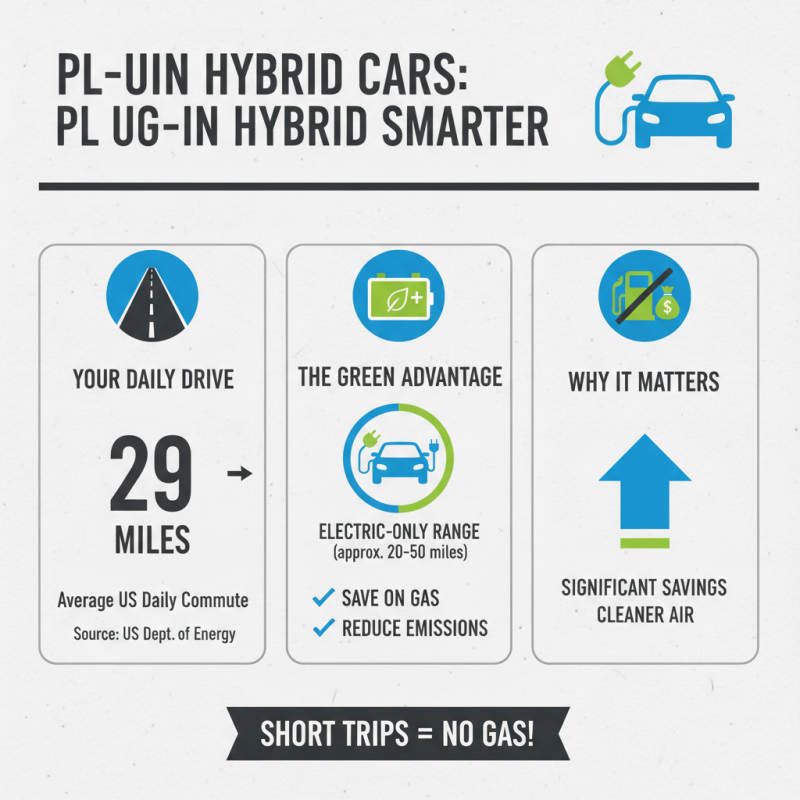
When choosing the best plug-in hybrid cars, understanding your daily commute is crucial. Many studies, including one by the U.S. Department of Energy, reveal that the average American drives about 29 miles each day. If your commute falls within this average, a plug-in hybrid vehicle can make a significant difference in fuel savings and emissions reduction. Its electric-only range allows for short trips to be completed without reliance on gasoline.
Evaluate your driving habits and typical routes. Do you frequently navigate stop-and-go traffic or long highway stretches? Stop-and-go situations often favor electric driving, as regenerative braking maximizes efficiency. In contrast, highway driving may burn gasoline faster than one realizes. It's essential to assess how often you can charge your vehicle at home or work, as this influences how much electric range you'll actually utilize.
Another important consideration is frequency of longer trips. If you often travel more than 30 miles, a plug-in hybrid provides flexibility as a gasoline engine supplements electric power. However, you might need to compromise on trunk space or comfort for rear passengers. Balancing these factors involves reflecting on personal needs and real-life scenarios, making the decision process complex and sometimes frustrating.
Evaluating Vehicle Range and Charging Options
When evaluating vehicle range, consider how far you typically drive daily. Plug-in hybrids usually offer a driving range between 20 to 50 miles on electric power alone. This can cater to short commutes or errands, but it may fall short for longer trips. Assessing your typical journey will help determine if a plug-in hybrid meets your needs.
Charging options are equally important. Many plug-in hybrids can be charged at home, but the availability of public charging stations may impact your decision. If you rely on public infrastructure, check local accessibility. Charging times can vary; some models can recharge in a few hours, while others may take longer. This aspect requires reflection. Will you consistently have access to charging at your home or workplace?
Incorporating a plug-in hybrid may require adjustments to your lifestyle. For instance, if you frequently drive beyond the electric range, consider how this affects your plans. Recharge time and range limitations are factors that can create friction in daily use. Think about your schedule and how you can make it work with your vehicle’s capabilities.
How to Choose the Best Plug In Hybrid Cars for Your Lifestyle? - Evaluating Vehicle Range and Charging Options
| Model |
Electric Range (miles) |
Combined Range (miles) |
Charging Time (hours) |
MPG (Combined) |
Seating Capacity |
Price ($) |
| Model A |
25 |
480 |
3.5 |
50 |
5 |
35,000 |
| Model B |
30 |
520 |
4 |
55 |
5 |
38,500 |
| Model C |
20 |
450 |
2.5 |
45 |
4 |
30,000 |
| Model D |
35 |
600 |
5 |
60 |
5 |
42,000 |
Comparing Fuel Efficiency and Maintenance Costs
When selecting a plug-in hybrid car, fuel efficiency is a crucial factor. Look for vehicles with high MPG ratings in both electric and gas modes. Some models excel at using electric power for short trips. Others may rely more on gasoline, which can increase your fuel costs. Evaluating your daily driving habits helps determine the best fit for your needs.
Maintenance costs also play a pivotal role. Plug-in hybrids often require specialized parts, which can be pricier than conventional cars. For instance, battery replacement can be expensive, causing financial strain in the long run. Regular maintenance might also be more complex, requiring visits to specific service centers. Count on potential costs associated with both electric and gasoline components.
Reflection on your driving lifestyle is essential. Are you a daily commuter or a weekend explorer? Your decisions on charging stations and fuel options can impact your overall cost. Additionally, think about environmental impact. While plug-in hybrids reduce emissions, they still rely on fossil fuels. Balancing your priorities will guide you to make a more thoughtful choice.
Choosing the Right Size and Features for Your Needs
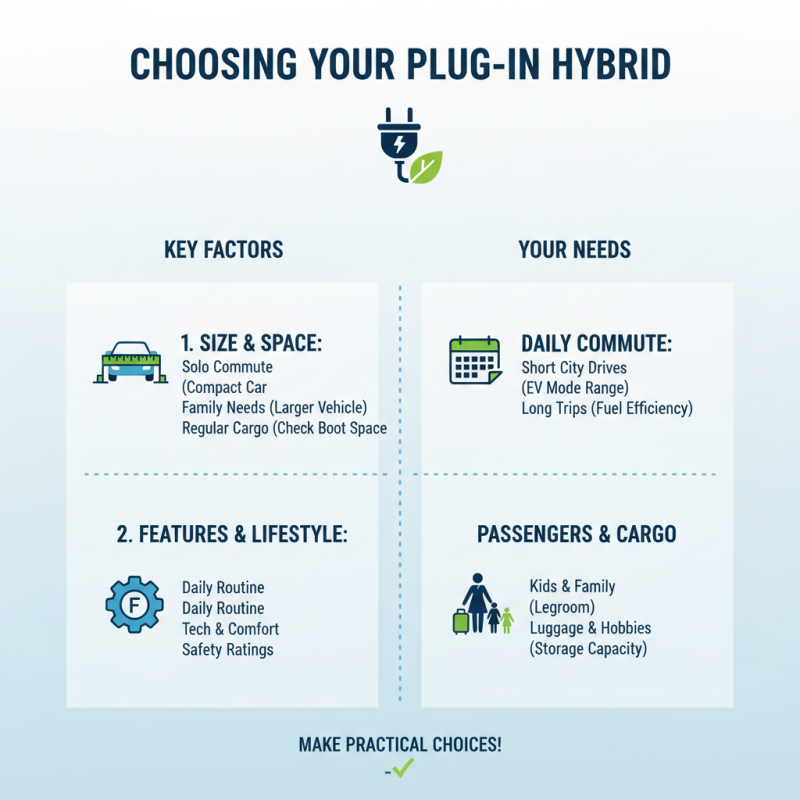
When choosing a plug-in hybrid car, size and features are critical. Your daily routine greatly impacts your needs. If you commute solo, a compact vehicle may suffice. However, families need more space. Consider how much cargo you regularly carry. Sometimes, a smaller car looks attractive but can become impractical.
Tips: Think about your lifestyle. Do you take weekend trips? A larger trunk can help. More space can mean more comfort. Check seating configurations and legroom too. A car that feels cramped can quickly become a burden.
Another aspect is technology. Modern cars offer various features like navigation and smartphone integration. It’s good to identify what you truly need versus what looks appealing. Sometimes, extra features are just distractions. Assess your priorities to avoid unnecessary complications.